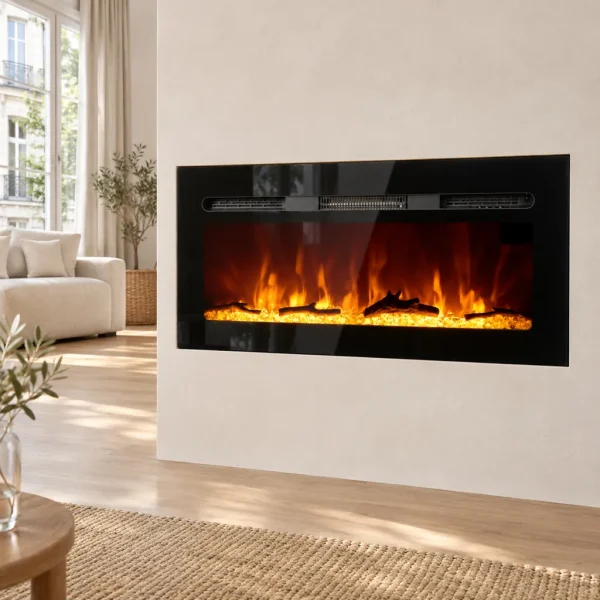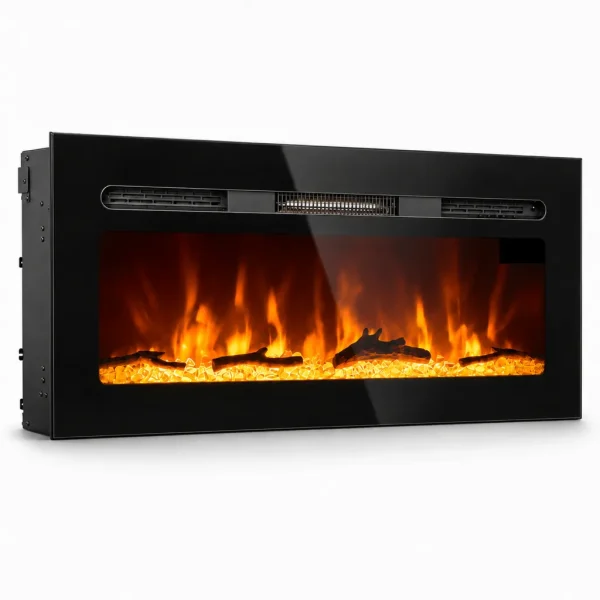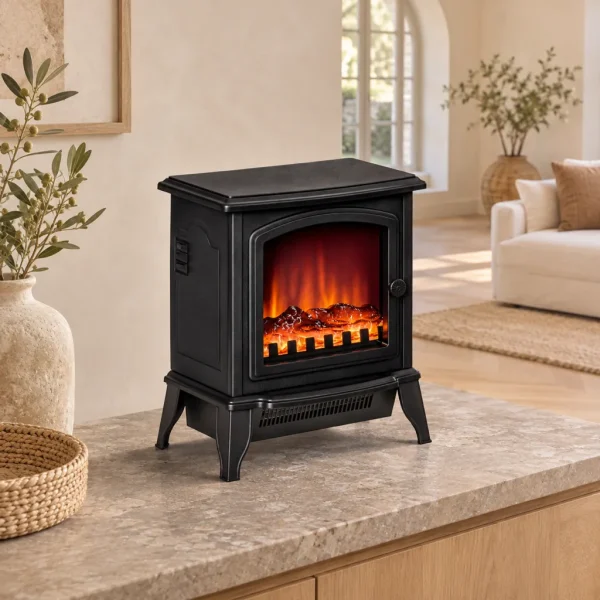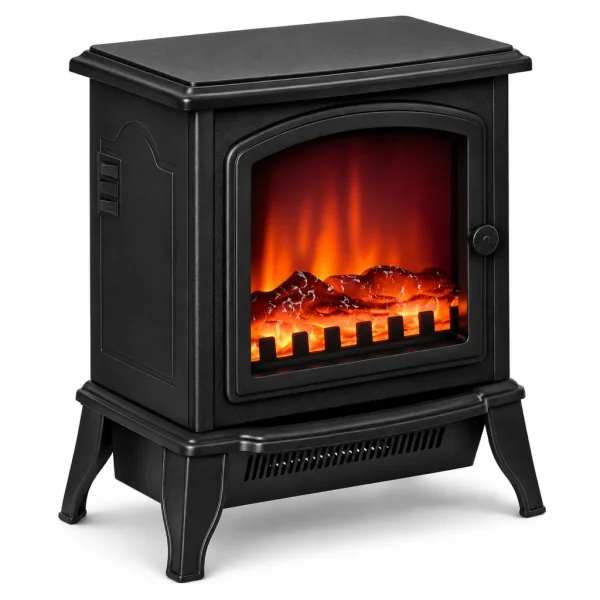
A fireplace without a chimney gives you the atmosphere of a fire in a room that has no chimney or flue and no way of adding one: a apartment, a bedroom, a rented living room. Two types of appliance meet this need with no connection to the outside. An electric fireplace plugs into a socket and produces an LED flame effect. A bioethanol fireplace produces a real flame from a liquid fuel. Both are supplementary heaters.
Here is how to decide between them based on your home and how you will use it.
Electric or bioethanol fireplace: the differences
| Electric fireplace | Bioethanol fireplace | |
|---|---|---|
| Flame | LED flame effect (a halogen lamp on one model), no combustion | Real flame |
| Energy | 230 V mains plug (European plug) | Bioethanol with at least 95% alcohol, not included |
| Heating | Supplementary fan heater on most models; some decorative models do not heat | Supplementary, ambient heat |
| Lighting | Button or remote control | By hand, with a long lighter |
| Flame without heat | Yes, on the heated models in our range | No: a real flame always gives off heat |
| Precautions | Keep the grille clear, never cover the appliance | Fill when cold, ventilate, keep away from flammable materials, never leave unattended |
| Formats | Wall-mounted, inset, stove, faux fireplace, TV stand | Freestanding stove or column, wall-mounted model |
The electric fireplace: the simplest choice
You plug it in, switch it on at the press of a button and, on many models, control it remotely. The LED flame effect recreates flames and glowing embers over a bed of logs, pebbles or crystals. On our heated models, it also works without the heat, so you keep the atmosphere in summer.
The fan heater usually has two settings, for example 900 and 1800 W or 1000 and 2000 W, with a thermostat on many models. It tops up your heating; it is not a main heat source.
A few formats that suit a home without a chimney:
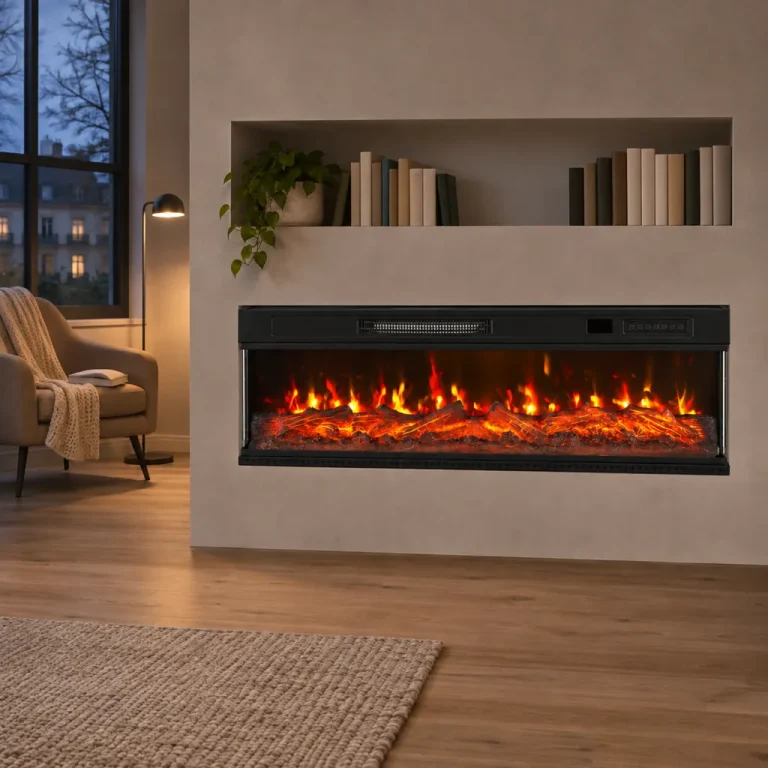
- Wall-mounted: Mürren, 91.4 × 15.8 × 45 cm, hangs on the wall with its bracket or fits into a recess. Its heater is rated at 1800 W.
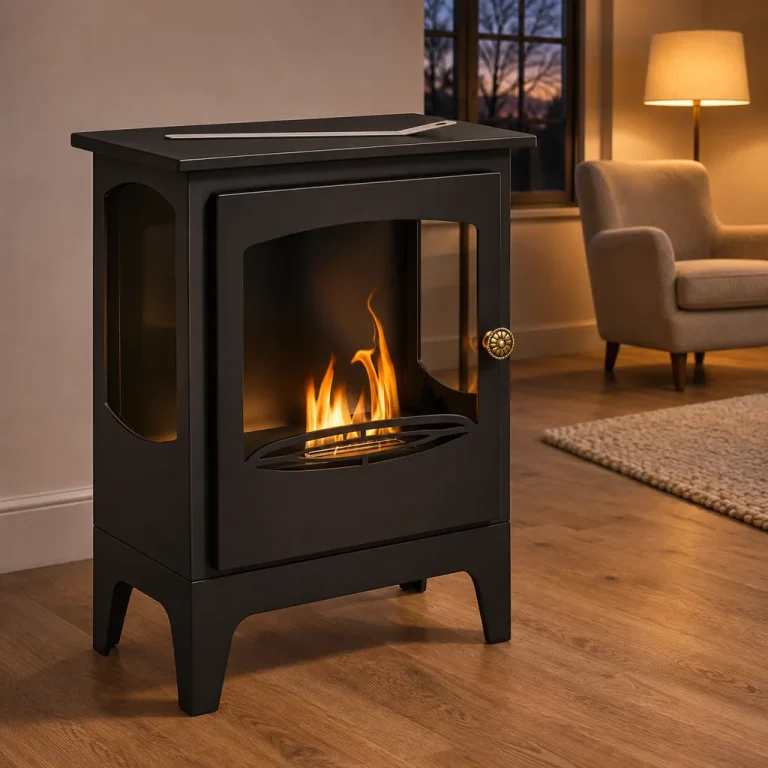
- Freestanding: Gstaad, a compact electric stove measuring 36.5 × 24 × 45.5 cm, at 1000 or 2000 W, moves easily from room to room.
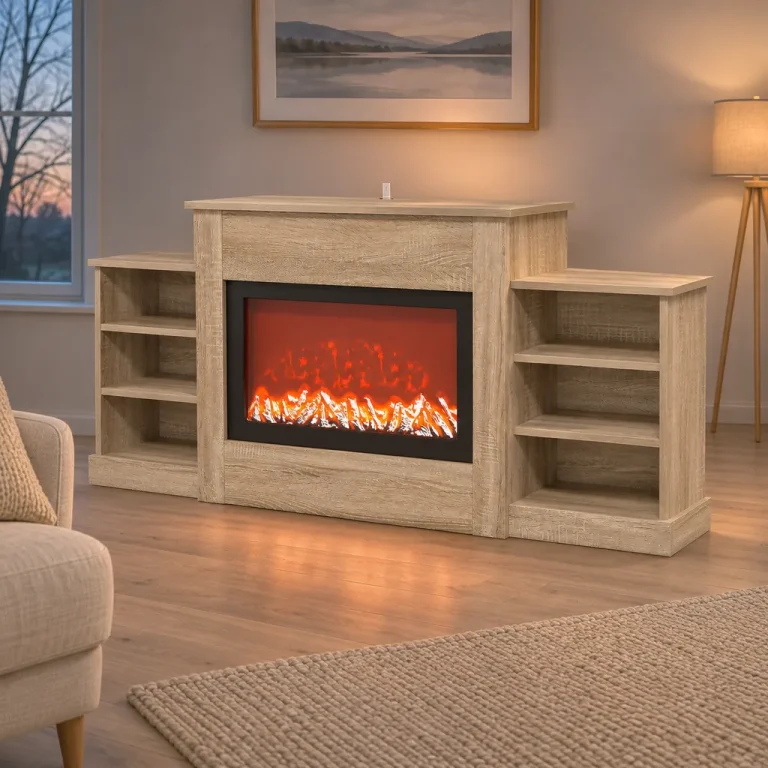
- Faux fireplace: a surround and firebox that stand against a wall, with or without heating depending on the model.
If you rent, freestanding models are the easiest option: no drilling, and they move house with you. For wall mounting, check with your landlord before drilling.
The bioethanol fireplace: a real flame without a chimney
Bioethanol burns without smoke or ash, which is why no flue is needed. You fill a burner, light it, then adjust or put out the flame with a sliding flap or lid.
Two examples from our range:
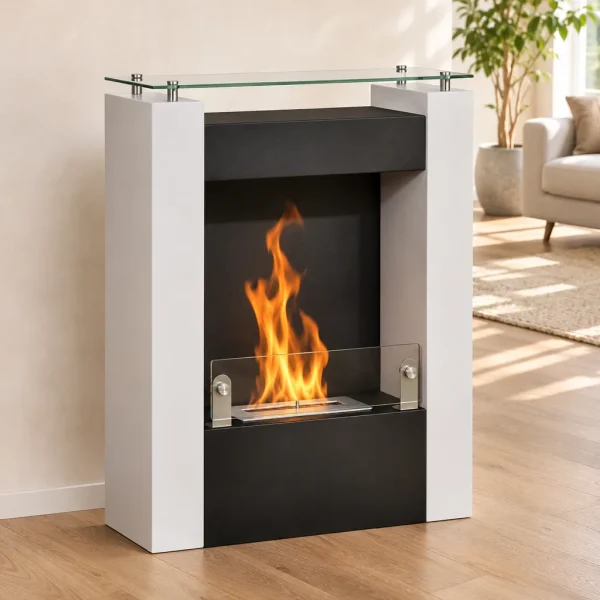
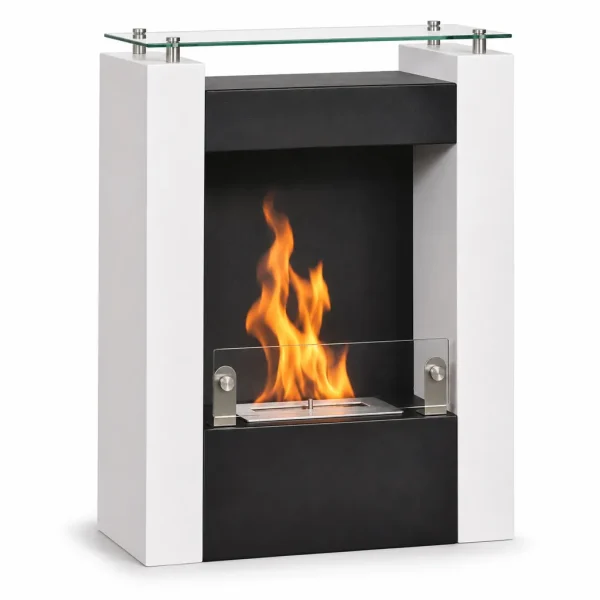
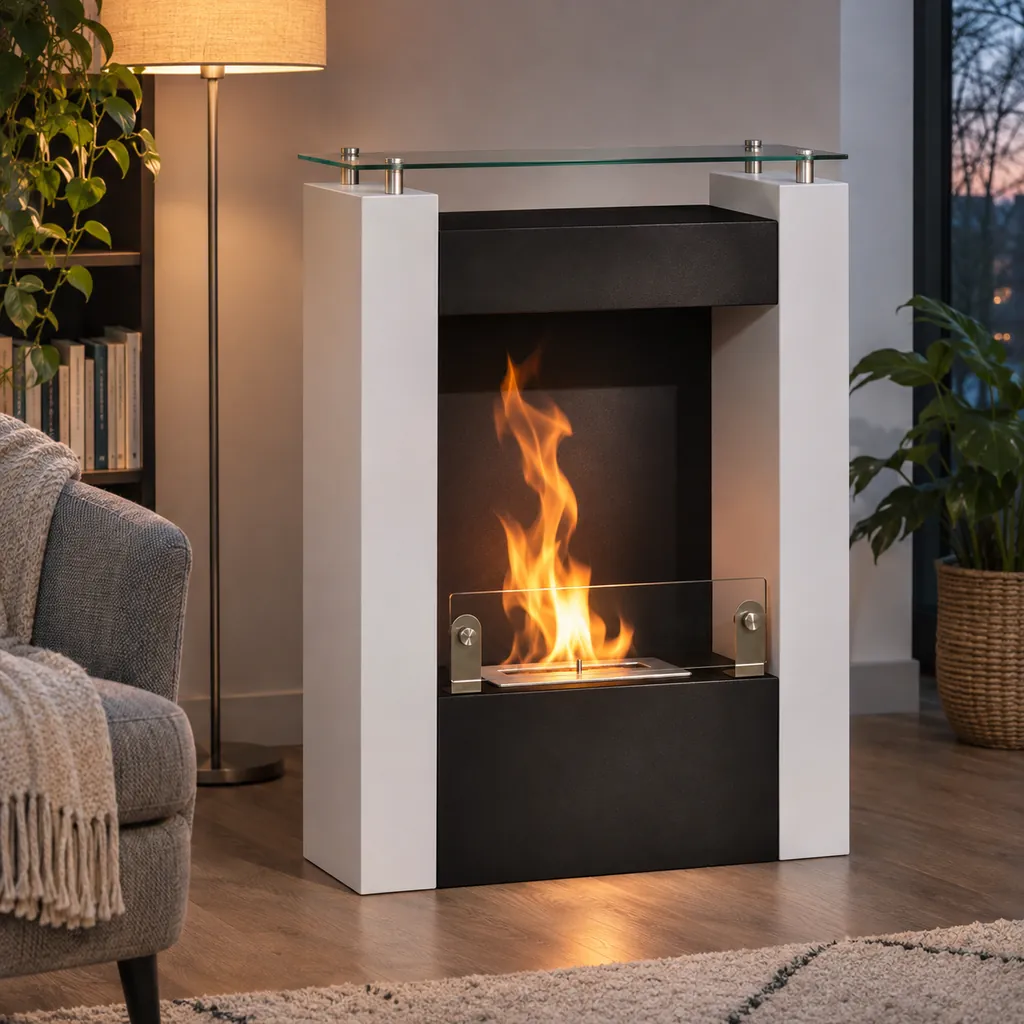
- Chamonix, a freestanding fireplace measuring 60 × 20 × 79 cm, with a 0.9 L burner and a glass shelf. The manufacturer states the equivalent of 6,800 BTU for around 20 m².
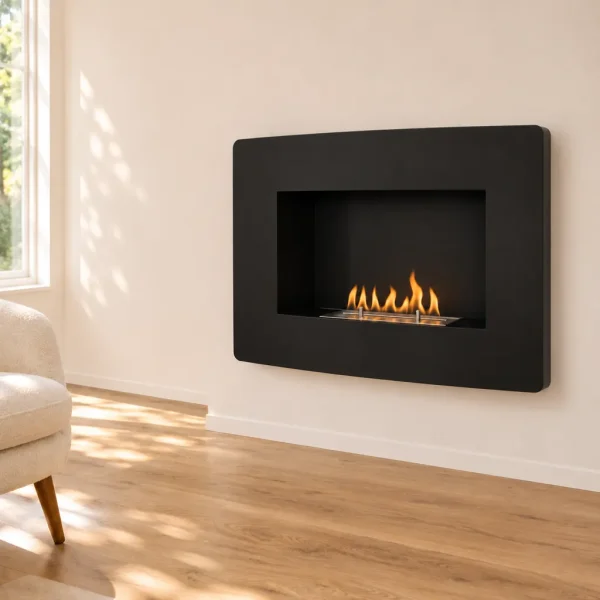
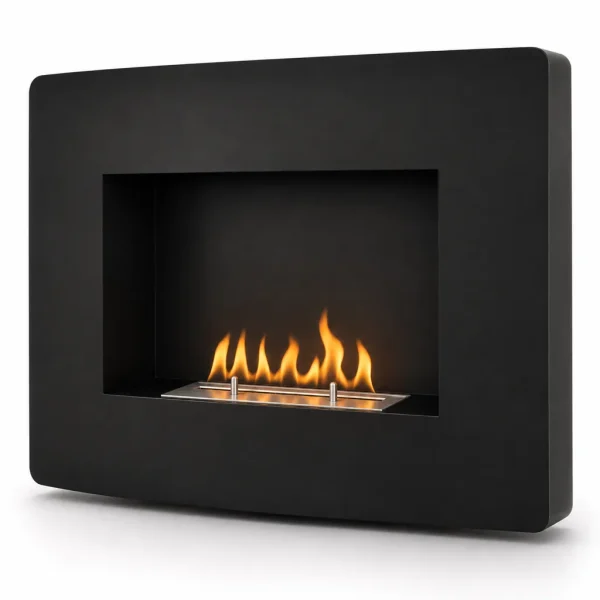
- Verbier, a wall-mounted fireplace measuring 66 × 16 × 52 cm with a curved black front. Its 0.9 L burner lasts about 3.3 hours with 95% alcohol, according to the manufacturer.
A real flame calls for precautions: fill the burner only when it is cold and out, never refill while the flame is lit, keep the appliance away from curtains and flammable materials, ventilate the room, never leave it unattended and keep children and pets at a distance. Our guide bioethanol fireplace safety: risks and good practice covers them in detail.
In a apartment: which one to choose?
Searches such as “flueless stove for a apartment” and “ethanol fireplace for an apartment” come up again and again. A few pointers:
- Small room, bedroom, home office: a small electric stove or a wall-mounted electric fireplace. No fuel to store, and no real flame near a bed.
- Living room where you want a real flame: a bioethanol fireplace or stove, in a room you can ventilate, with the safety clearances respected.
- Rented home: go for a freestanding model. Check your tenancy agreement or building rules before any fixed installation, and before using a flame appliance if you are in any doubt.
- Young children or pets: electric is easier to live with day to day. Choose a model with a child lock if the product page mentions one.
Installing without building work
Without a flue, installation is often very simple. An electric or bioethanol stove stands on the floor after some simple assembly of the legs or body, depending on the model. A faux fireplace is assembled, then placed against a wall, ideally with the anti-tip fixing when one is supplied. A wall-mounted fireplace hangs from the bracket and fixings supplied; a wall-mounted ethanol fireplace such as Avoriaz needs a brick or concrete wall, according to its manufacturer.
Only an inset installation involves real building work: creating a recess to the dimensions given in the instructions and providing an accessible socket. Our guide to installing an electric fireplace insert explains the steps.
Running costs
The two types do not cost the same to run.
- Electric: consumption depends on the heat setting and how long it runs. The calculation is simple: power in kW × hours × the price per kWh on your tariff. Our guide to electric fireplace running costs gives examples.
- Bioethanol: you buy the fuel. A 0.9 L burner lasts about 3 hours according to the manufacturers of our models. Multiply the volume burned by the price you pay per liter.
Five questions to ask yourself before you buy
- Do you want heat, or just the look of a fire? For decoration alone, a decorative LED faux fireplace is enough. For extra warmth, choose a heated model.
- Where will the appliance go? A bedroom, a home office or a hallway is better suited to electric. A well-ventilated living room can take a real flame.
- How much space do you have? Measure the available wall or floor space. A wall-mounted model frees up the floor; a freestanding stove can be moved.
- Are you comfortable handling fuel? Bioethanol has to be bought, stored and poured carefully, with the burner cold. If that sounds like a chore, electric will be simpler.
- Who uses the room? With young children or pets, go for an electric model, or a bioethanol model with a protective glass screen and constant supervision.
How to decide
Choose electric if you want to switch on in an instant, use the flame effect without heat, or put the appliance in a bedroom. Choose bioethanol if a real flame matters to you and you are happy to handle fuel and follow the safety rules.
Browse our electric fireplaces, our electric stoves, our bioethanol fireplaces and our wall-mounted ethanol fireplaces.
Frequently asked questions
Does a fireplace without a chimney really give out heat?
Yes, as supplementary heat. A heated electric fireplace blows out warm air, and a bioethanol fireplace heats with its flame. Neither replaces a main heating system. Some decorative electric models do not heat at all.
Can you install a bioethanol fireplace in a apartment?
It does not need a flue. Place it in a room you can ventilate, away from flammable materials, follow the instructions and check your tenancy agreement or building rules if in doubt.
Do you need an electrician for an electric fireplace?
Not for a freestanding or wall-mounted model plugged into an existing socket. For an inset installation that involves creating a recess and a new socket, call in a professional if you are not confident doing it yourself.
Which fireplace without a chimney is best for a bedroom?
An electric fireplace or stove: no real flame, no fuel, and a flame effect you can use without heat.