A bioethanol fireplace produces a real flame in the room, with no flue. Like any appliance with a naked flame, it carries risks: burns, fire if the fuel is handled carelessly, and combustion that takes place inside the room, which is why ventilation matters. These risks are kept under control with a few precise habits: fill the burner only when it is cold and out, keep flammable materials at a distance, ventilate, never leave the flame unattended and follow the appliance’s instructions.
Here is good practice, step by step, before, during and after every fire.
Where do the risks of a bioethanol fireplace come from?
- Refilling. Pouring fuel onto a burner that is still lit or hot is the riskiest situation. A bioethanol flame can be hard to see in daylight.
- The immediate surroundings. Curtains, cushions, paper, dried plants or furniture placed too close can catch fire.
- Tipping over. An appliance standing on an unstable floor, or knocked, can fall over.
- The air in the room. Combustion takes place indoors, with no flue to carry anything away: the room must be ventilated.
- Fuel storage. An open container, or one kept near a heat source, is a hazard in itself.
Before lighting: installing the appliance correctly
The right position
- A flat, stable floor for a freestanding model.
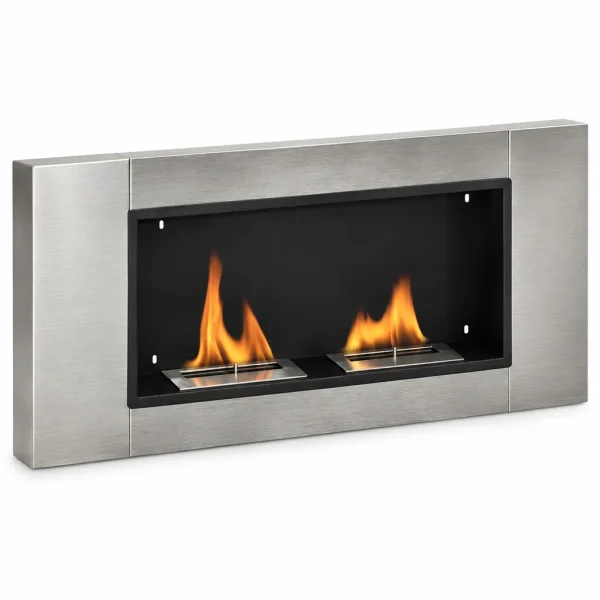
- For a wall-mounted model, the type of wall specified in the instructions. For Avoriaz, the manufacturer requires fixing to a brick or concrete wall.
- Away from curtains, net curtains, bookshelves and any flammable material, following the clearances in the instructions.
- Out of walkways, so that nobody knocks into the appliance.
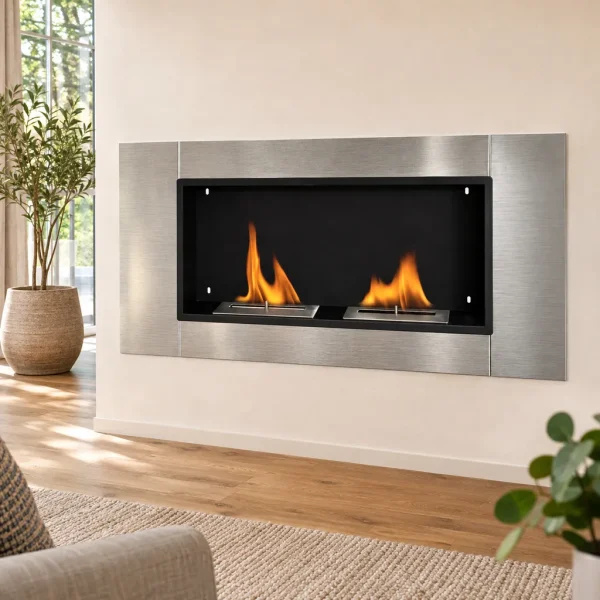
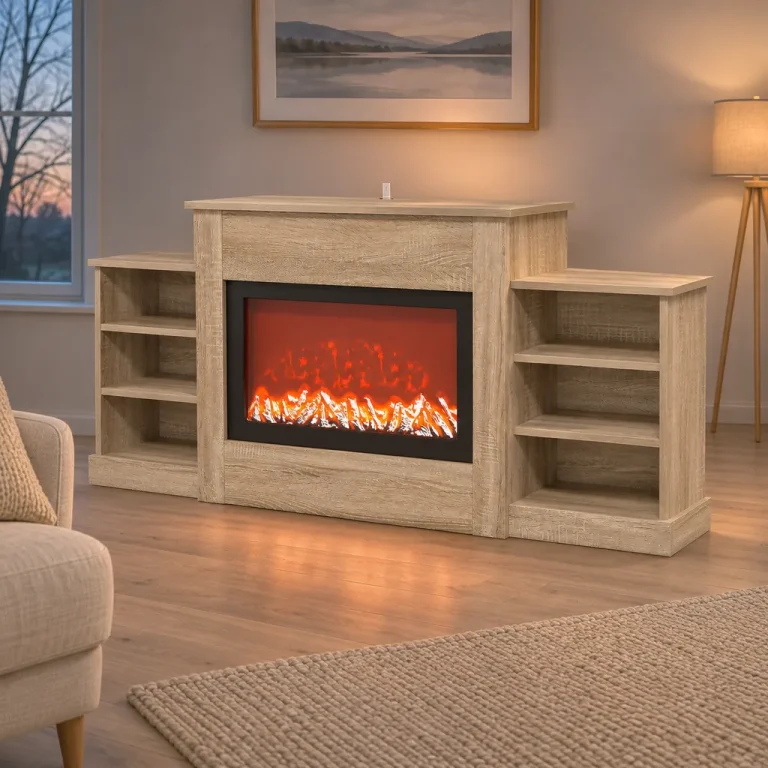
- Never inside a decorative surround that is not designed for bioethanol: the manufacturer of our Lillehammer surround states it is for electric fireboxes only.
Protection around the flame
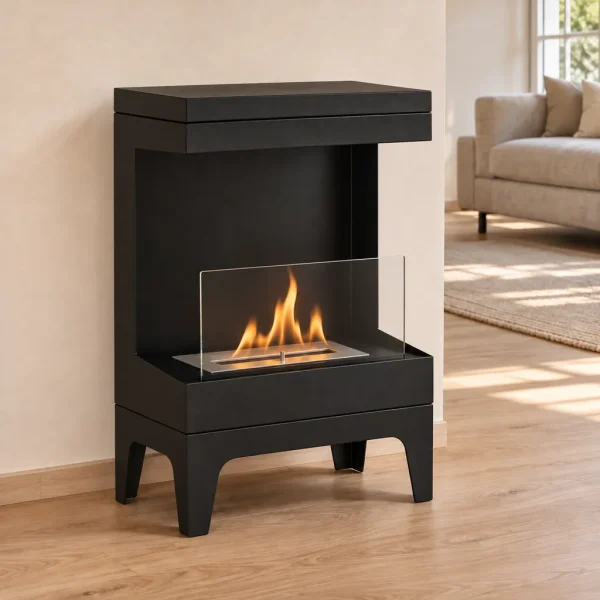
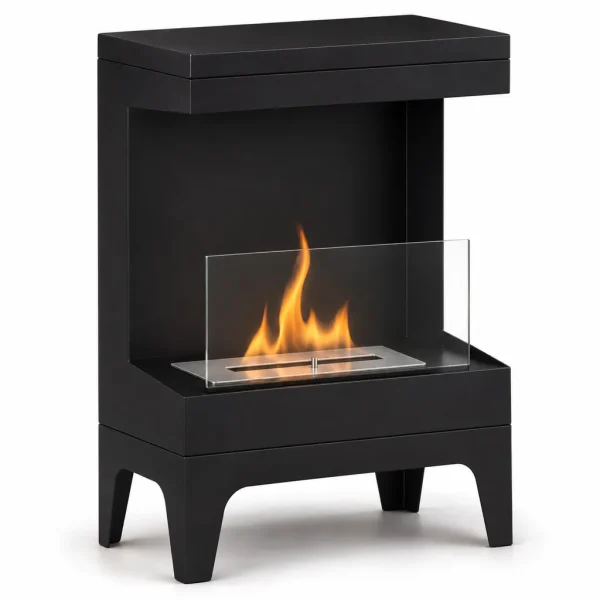
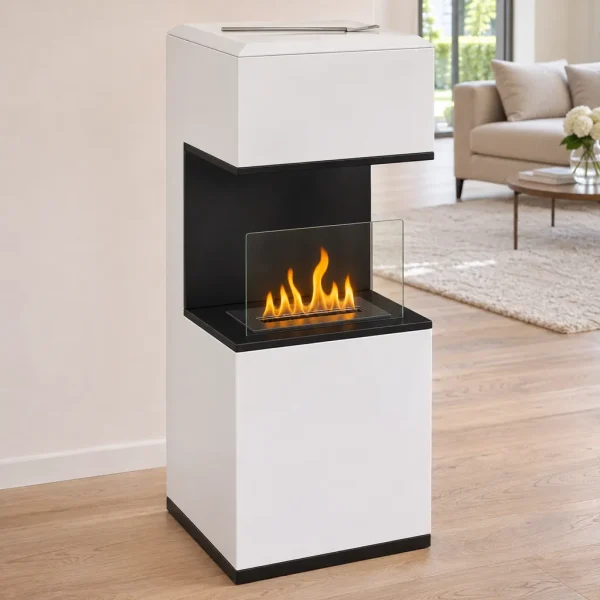
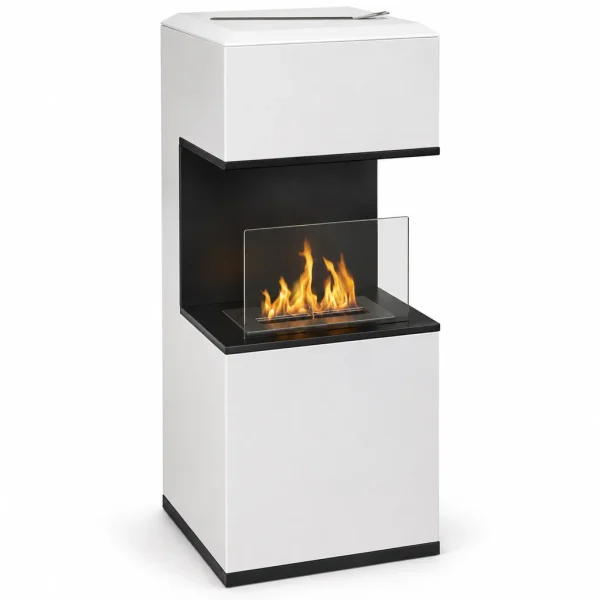
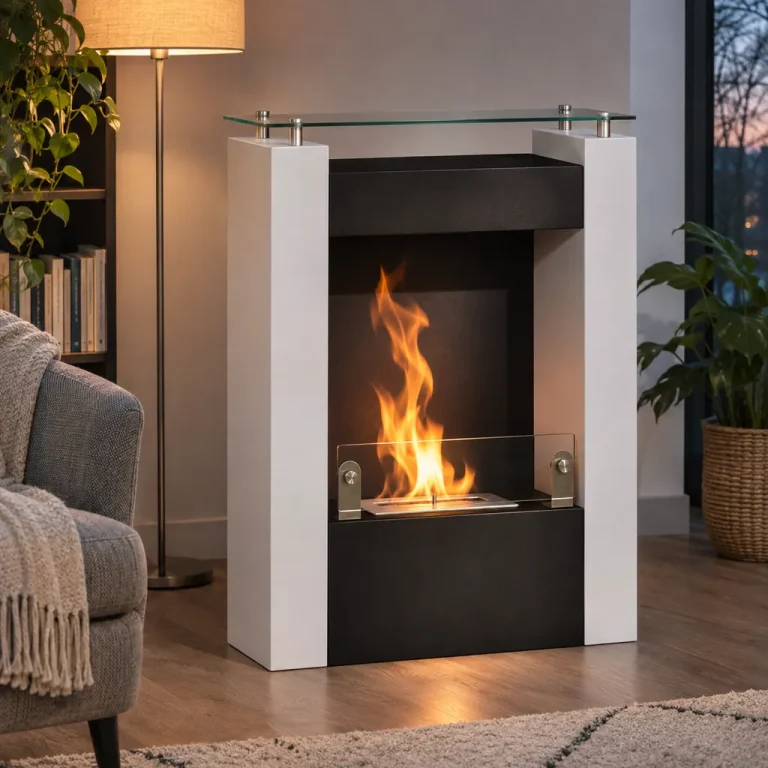
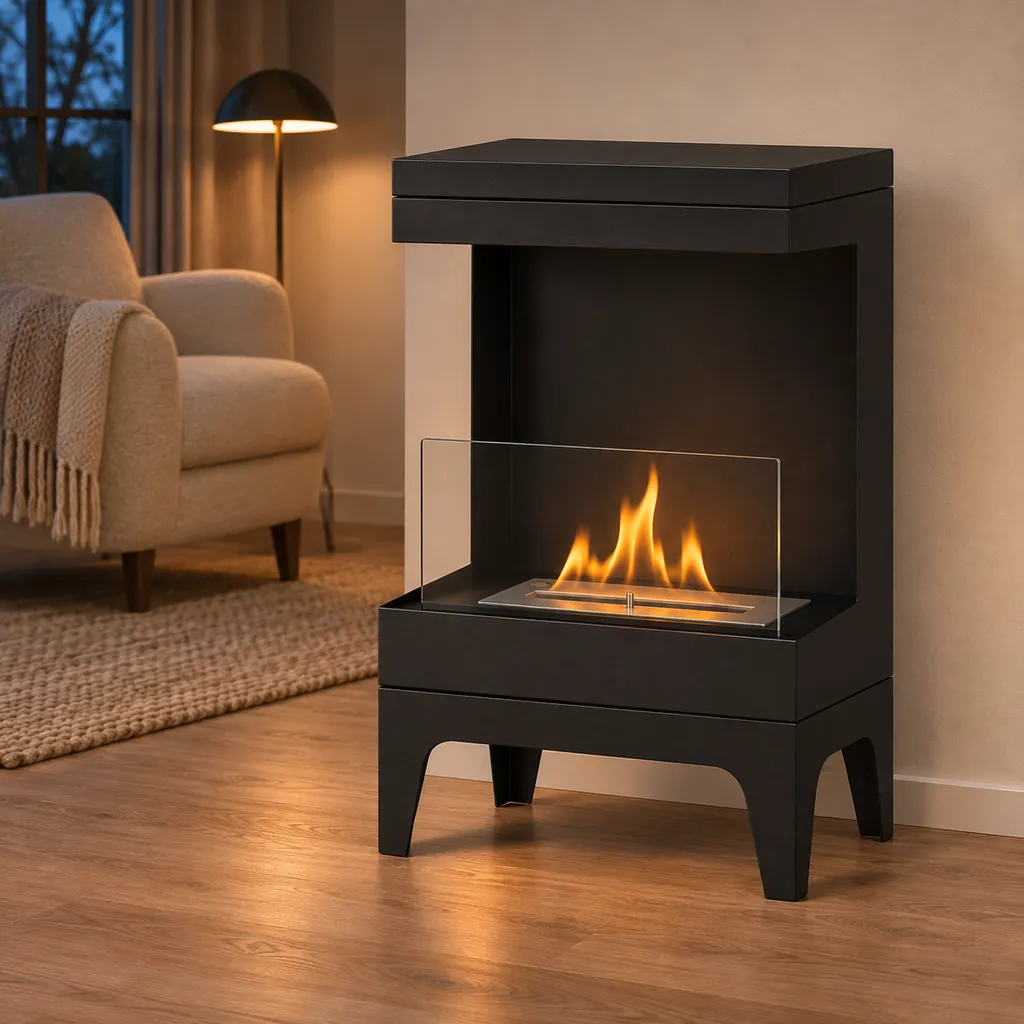
Some appliances have a glass panel in front of the flame. Cordon has a protective glass screen at the front, Flaine a tempered glass panel in front of the burner. Others are open: Tignes, for example, comes without a windscreen, and its manufacturer advises keeping it away from flammable materials. With children or pets, choose a protected model and keep a safe distance.
Filling the burner: the method
- Flame out, burner cold. Wait until it has cooled down completely after a fire. Do not rely solely on the absence of a visible flame.
- The right fuel. For our models, bioethanol with an alcohol content of at least 95%. Nothing else.
- Correct level. Do not go above the maximum level shown in the instructions.
- Drips wiped up. Wipe up any spill before lighting. Close the container and move it away.
- Light from a distance. Use a long lighter, without leaning over the burner.
The rule to remember: never fill a burner that is lit or hot.
While the fire is burning
- Stay in the room. Do not leave the room or go to bed with the flame lit.
- Ventilate. Open a window regularly, especially in a small room. Follow the recommendations in the instructions.
- Keep children and pets away. The sides and the glass get hot.
- Do not move the appliance while it is burning or still hot.
- Do not put anything on it, and do not use it for cooking or drying clothes. The manufacturers of several of our models state that they are not designed for cooking.
- Keep the fuel out of the room, or well away from the appliance.
Putting the flame out properly
Do not blow the flame out. Use the tool provided, which closes the burner and starves the flame of air:
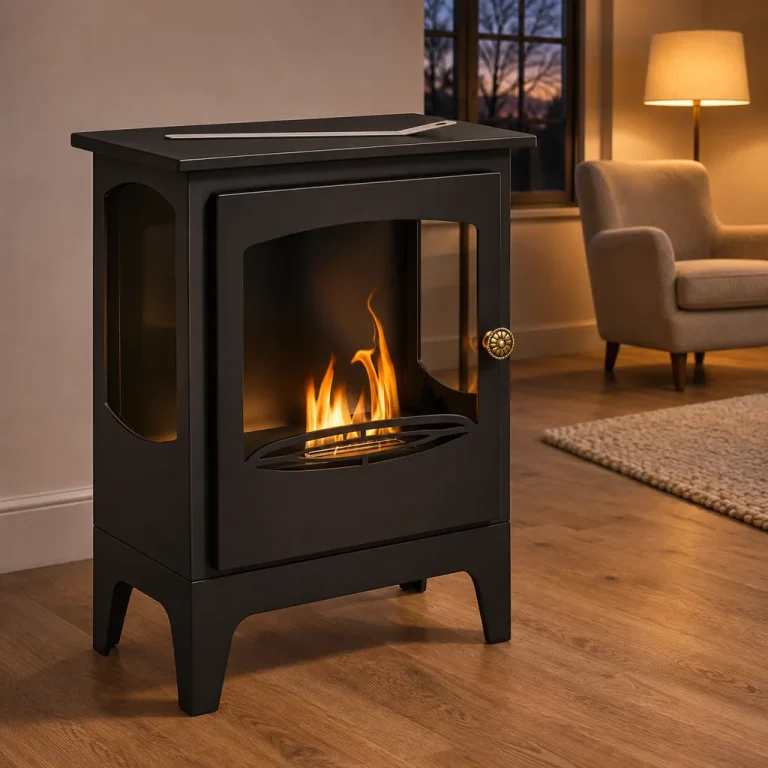
- Bonneval: control slider with a handle, plus a stainless steel snuffer rod supplied;
- Flaine: stainless steel snuffer supplied;
- Avoriaz: adjustment and snuffer sliders, operated with the hook supplied;
- Cordon: lid supplied to adjust and put out the flame.
Then let everything cool down before touching the burner.
If fuel is spilt
If bioethanol has run down beside the burner or onto the floor, do not light it. Wipe it up with an absorbent cloth, ventilate the room and wait until the surface is completely dry before lighting a fire. Keep the used cloth outdoors or well away from any heat source. If fuel has run inside the appliance, outside the burner, refer to the instructions before relighting.
Storing the fuel
- in its original container, closed and labelled;
- out of reach of children;
- away from the appliance, any flame and any heat source.
To choose and measure out your fuel, read our guide bioethanol fuel for stoves and fireplaces.
Choosing an appliance that is easier to use
When you buy, a few details make everyday use more relaxed. Look for them on the product page and in the photos:
- A slider or lid to adjust the flame, with a handle, hook or rod so you can operate it without putting your hand near the flame.
- A glass screen in front of the flame, if the appliance stands in a busy room.
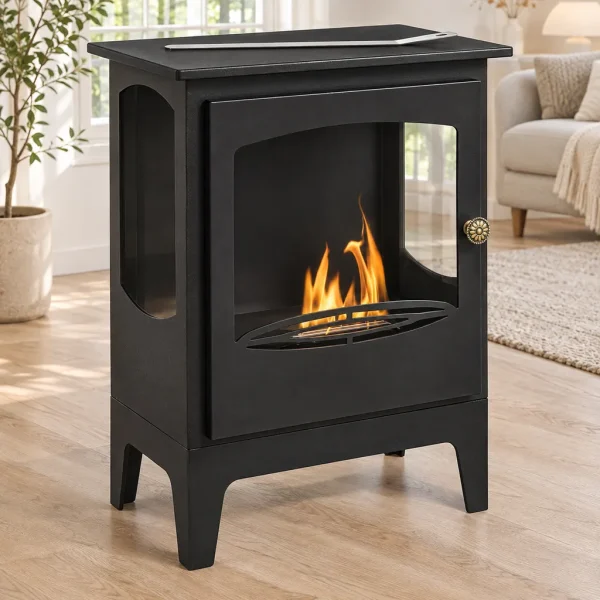
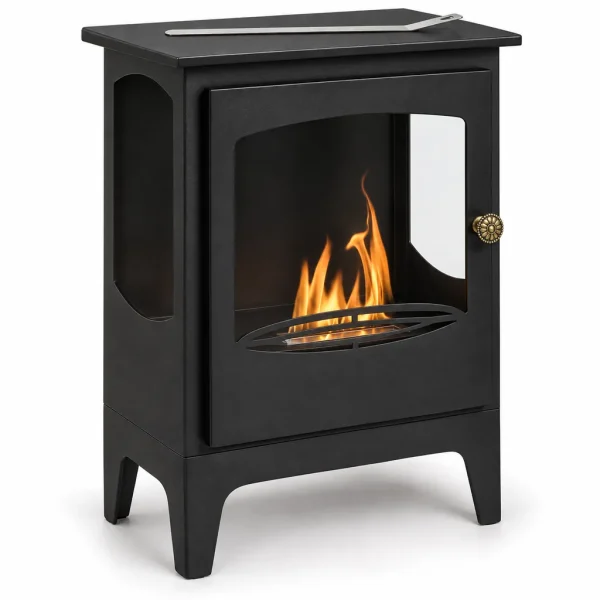
- A wide, stable base for a freestanding model. Stoves on four legs, such as Bonneval or Cordon, stand on a flat floor.
- A burner at an easy height, so you can fill it without bending awkwardly. A column such as Flaine puts the burner at mid-height.
- Clear instructions, to be read in full before the first fire and kept close to hand.
These features do not replace the habits described above. They simply make them easier to follow every evening.
Good practice at a glance
| Stage | Do | Never |
|---|---|---|
| Installation | Stable floor or suitable wall, clearances from the instructions | Place it near curtains or inside an unsuitable surround |
| Filling | Burner cold and out, correct level | Fill it while lit or hot |
| Lighting | Long lighter, drips wiped up | Lean over the burner |
| Burning | Supervise, ventilate, keep children and pets away | Leave the room, move the appliance |
| Putting out | Snuffer tool supplied | Blow on the flame |
| Storage | Closed container, away from heat, out of reach | Leave the container next to the appliance |
What if you would rather avoid a real flame?
If handling fuel does not suit you, or the appliance is meant for a child’s bedroom, an electric fire is simpler: LED flame effect, plugs into a socket, supplementary heat on most models, and a flame effect you can use without the heater. Compare the two in our guide flueless fireplaces: electric or bioethanol.
Browse our bioethanol fireplaces, our bioethanol stoves or our electric fireplaces.
Frequently asked questions
Are bioethanol fireplaces dangerous?
They carry the same risks as any appliance with a naked flame: burns, fire, and air in the room that needs refreshing, since combustion takes place without a flue. These risks are reduced by following the instructions, filling only when cold, ventilating and keeping an eye on the flame.
Do you need to ventilate the room?
Yes. Combustion takes place in the room, with no flue. Ventilate regularly and follow the instructions for your appliance.
Can you leave a bioethanol fireplace burning overnight?
No. Never leave the flame unattended. Put it out with the tool supplied before leaving the room or going to bed.
How do you put out a bioethanol fireplace?
With the slider, lid or snuffer supplied, which closes the burner. Never by blowing on it.
Is a bioethanol fireplace suitable with young children?
It requires constant vigilance. Choose a model with a protective glass screen, keep a safe distance and never leave a child alone near the flame. An electric fire is a simpler alternative for everyday family life.