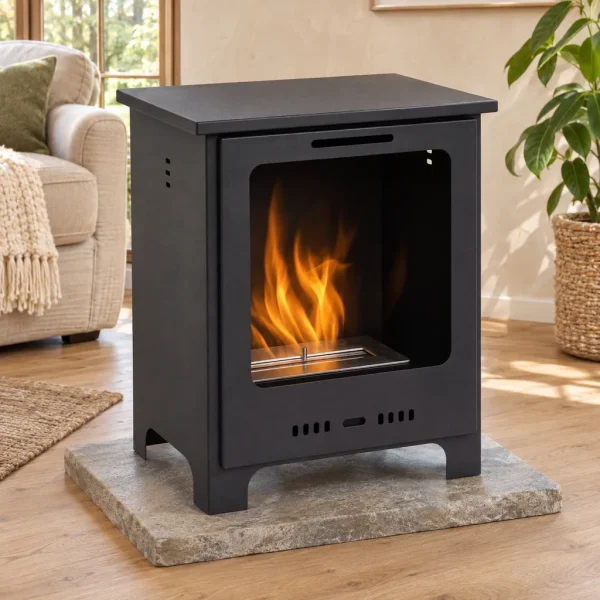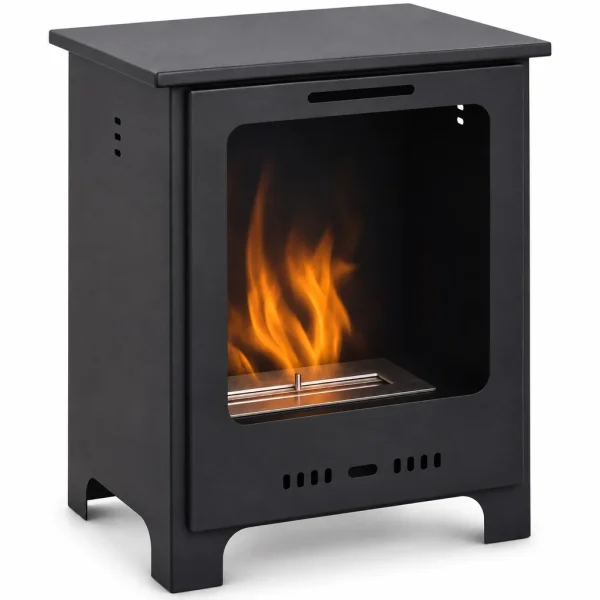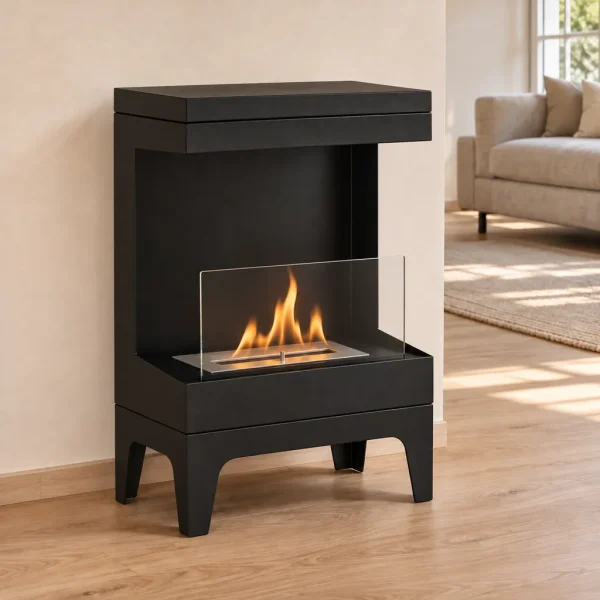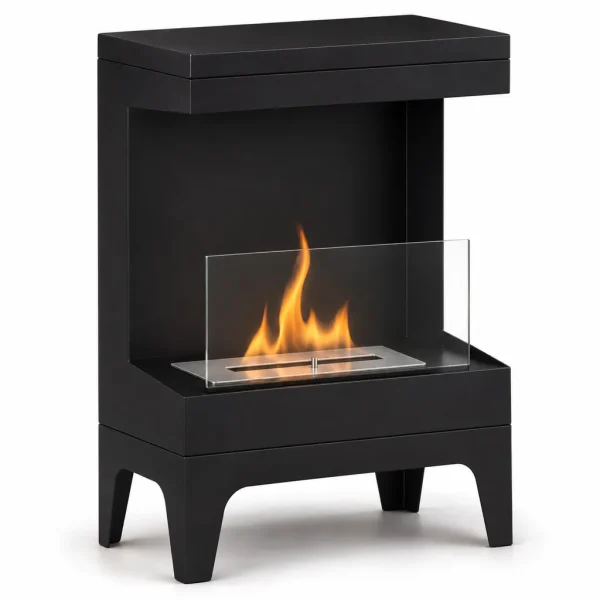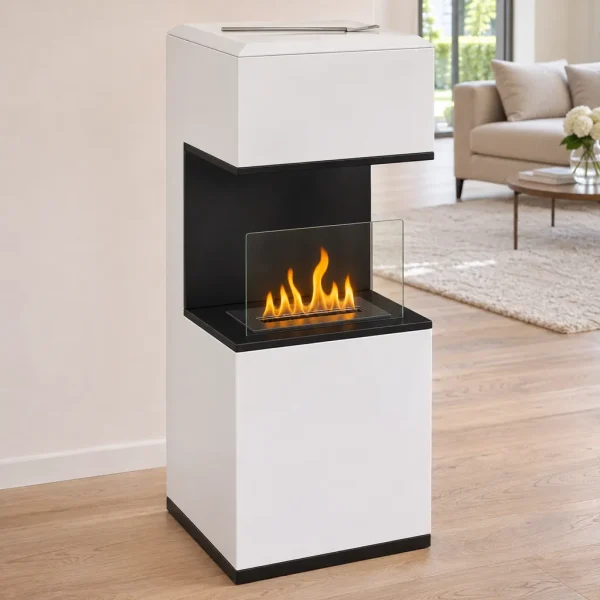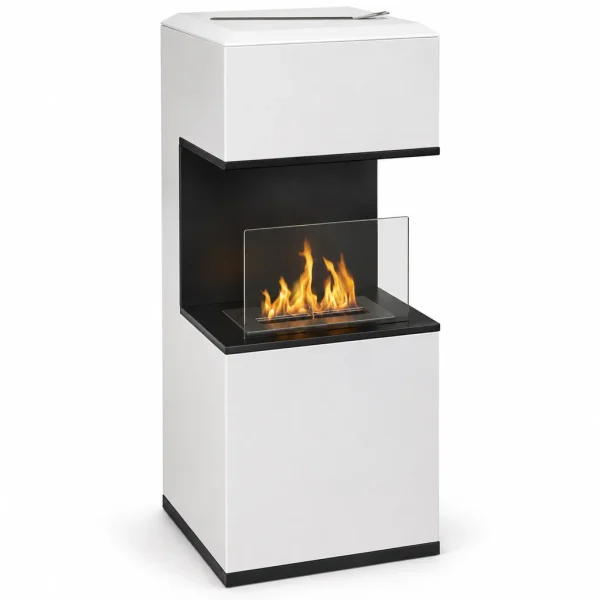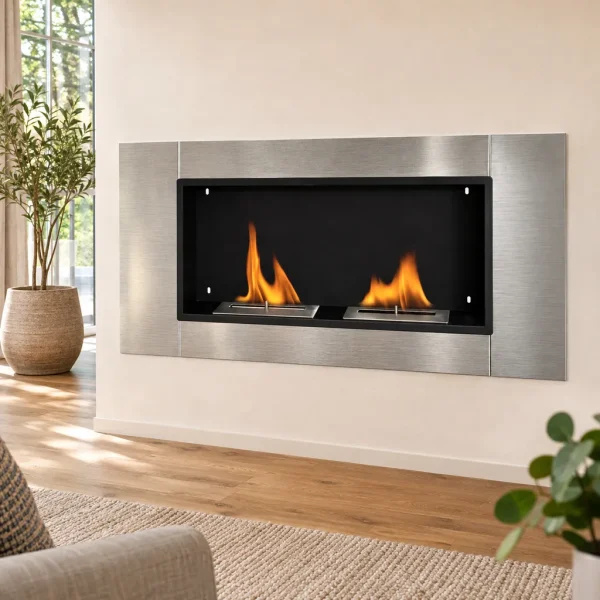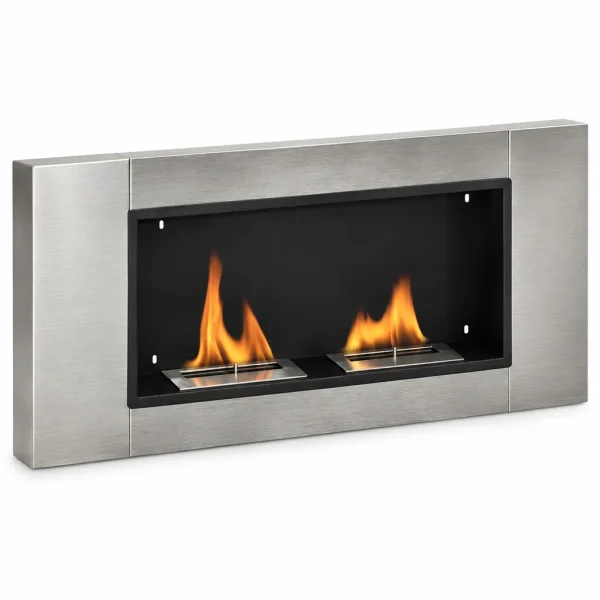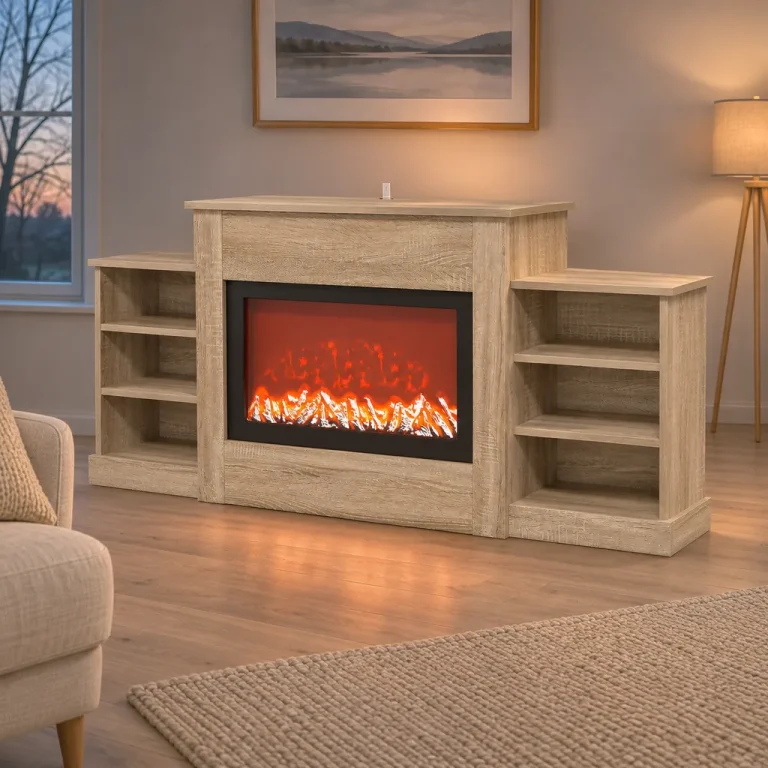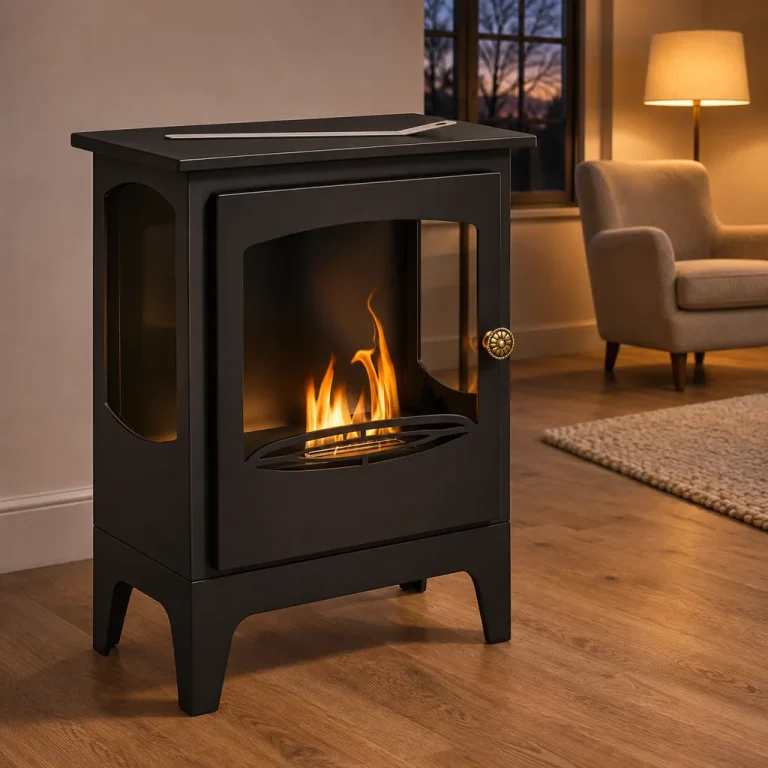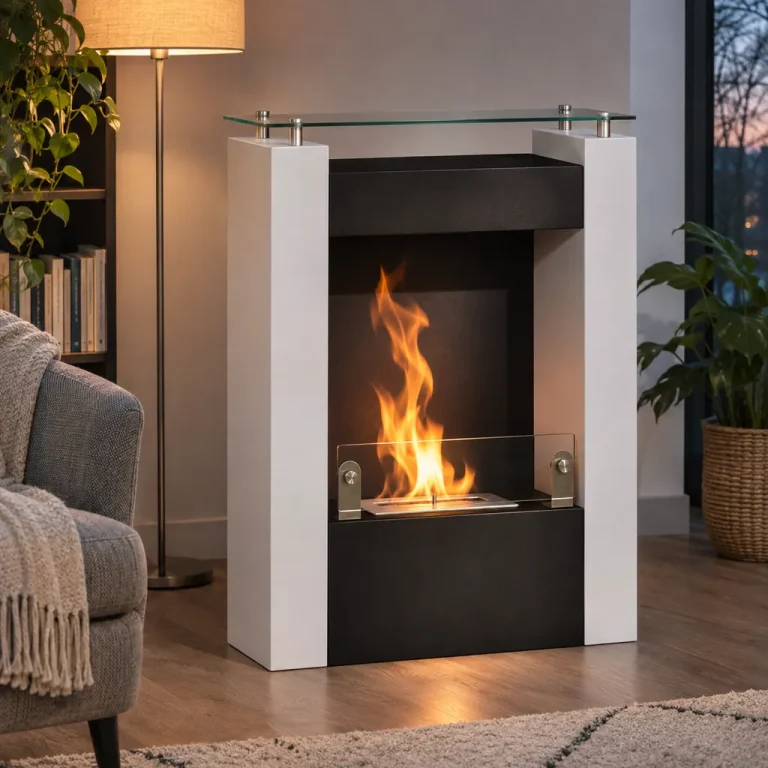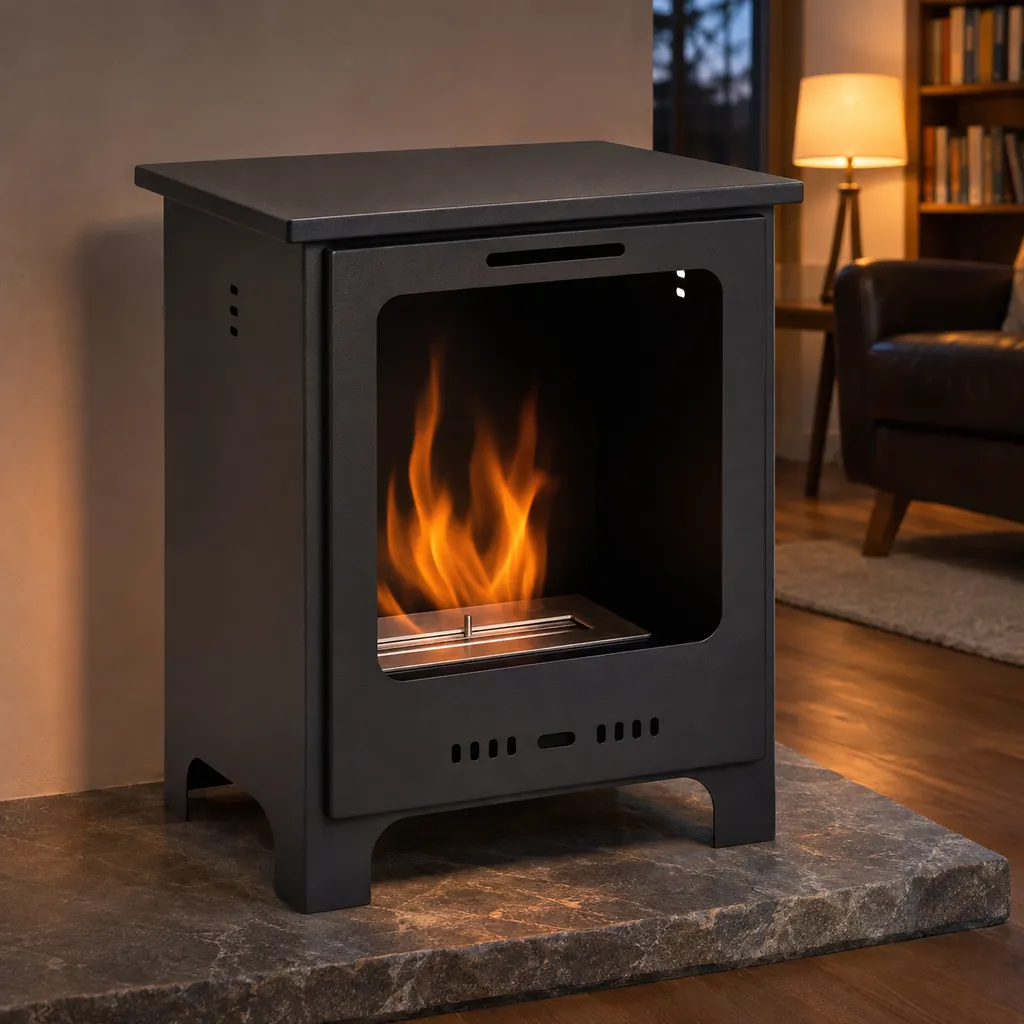
For a bioethanol stove or fireplace, use the fuel specified in the appliance’s instructions. For all our models, that means bioethanol with an alcohol content of at least 95%. Fuel is never supplied with the appliance. As for consumption, the manufacturers of our models quote around 3 hours of flame for a 0.9 L or 1.2 L burner: the actual burn time depends mainly on how high you set the flame.
This guide helps you choose the right fuel, estimate how much you will use and store it correctly.
Which bioethanol fuel should you choose for your stove?
Alcohol content
This is the first thing to check. The product pages of all our bioethanol stoves and fireplaces call for bioethanol with a minimum alcohol content of 95%. Read the label on the bottle: the percentage is printed on it. A product with a lower alcohol content does not match what our manufacturers specify.
Liquid or gel?
The product pages for our models call for bioethanol of at least 95% and make no mention of gel. Only use a gel if your appliance’s instructions specifically allow it.
What you must never use
- petrol, paraffin or any other fuel;
- an alcohol whose strength does not match the instructions;
- a mixture of different products in the same burner.
If in doubt, pour nothing and read the appliance’s instructions again.
How long does a litre of bioethanol last?
Our manufacturers do not give a burn time per litre, but per fill of the burner. Here are the figures from our product pages, all supplied by the manufacturers.
| Model | Type | Burner | Stated burn time | Approximate use per hour* |
|---|---|---|---|---|
| Tignes | Freestanding stove | 0.9 L | About 3 h | About 0.3 L/h |
| Cordon | Freestanding stove | 0.9 L | About 3.3 h (95% alcohol) | About 0.27 L/h |
| Bonneval | Freestanding stove | 1.2 L | About 3 h | About 0.4 L/h |
| Flaine | Freestanding column | 1.2 L | 3 h | About 0.4 L/h |
| Avoriaz | Wall-mounted, 2 burners | 2 × 0.9 L | About 3 h | About 0.6 L/h with both burners |
* Simply the burner capacity divided by the stated burn time. This is a theoretical average: with a high flame the burner empties faster; with the flame turned down using the slider, it lasts longer.
In practice, a 0.9 L burner gives you roughly an evening of flame. For a longer fire, you need to put it out, wait for the burner to cool down, then refill it.
Working out the cost of an evening
We do not sell fuel and do not give a price per litre: it varies with the pack size and where you buy it. The sum is easy to do with the price you pay:
cost of a fire = litres burned × price per litre
How it works: with a 0.9 L burner burned right down, the cost is 0.9 times your price per litre. If you buy a 5 L container, first divide its price by 5 to get the price per litre. For an appliance with two 0.9 L burners, such as Avoriaz, allow 1.8 L per full burn if you light both.
Using less fuel without losing the atmosphere
Many people search for why their bioethanol fireplace seems to burn through fuel so quickly. A few simple habits help:
- Adjust the flame. The slider or lid reduces the burner opening. A lower flame uses less fuel.
- Stick to the maximum fill level. An overfilled burner can overflow.
- Match the burner to the room. With two burners, as on Avoriaz, you can light just one if the instructions allow it.
- Put the flame out with the tool supplied as soon as you no longer need it, and always before leaving the room. Once the burner has cooled, cover it if the instructions say so, as with Tignes.
Filling the burner: the right method
- Make sure the flame is out and the burner is cold. A bioethanol flame can be hard to see in daylight: do not rely on your eyes alone, wait.
- Put the container on a stable surface, away from any flame or heat source.
- Pour slowly, using a spout or a funnel, up to the level shown in the instructions.
- Wipe up any spilt drops straight away, close the container and move it away before lighting.
- Light with a long lighter, keeping your face and hands at a distance.
Never fill a burner that is lit or still hot. This is the most important rule. For the other precautions, read our guide bioethanol fireplace safety: risks and good practice.
Before your first fire
A new appliance needs a little preparation before the first fill:
- Read the instructions in full, including the clearances to keep around the appliance.
- Finish the assembly: feet, glass, wall fixing depending on the model. Aussois, for example, only needs its four feet fitting; Avoriaz is fixed to a brick or concrete wall with the fittings included.
- Find the snuffer tool supplied and try out the slider with the burner empty, so you know how to operate it.
- Choose the final position before filling: you must not move an appliance that is lit or still hot.
Start with a short fire, with the burner partly filled, to get a feel for the flame height and the slider setting.
Storing bioethanol
- in its original container, tightly closed and labelled;
- out of reach of children and pets;
- away from the appliance, any flame and any heat source;
- following the instructions on the product label.
Do not keep more than you need in your living area.
Common mistakes
- Using an alcohol that does not match the instructions, just because it was sitting in a cupboard.
- Filling to the brim to save time: the burner may overflow.
- Topping up a burner that is still hot to make the evening last longer.
- Leaving the container open or next to the appliance while it is burning.
- Comparing burn times without looking at the setting: the manufacturer’s stated burn time is not guaranteed if the slider is left wide open.
Choosing an appliance to suit how you use it
If you want long evenings without refilling, look at the burner capacity. If you want a flame in a small space, a compact stove such as Tignes or Cordon is enough. For a tall flame you can see from across the room, the Flaine column puts the burner at mid-height. For a large wall, Avoriaz lines up two burners across 110 cm.
Compare every model in our bioethanol stoves, wall-mounted ethanol fireplaces and bioethanol fireplaces collections.
Frequently asked questions
Which bioethanol should I use in a stove?
The one specified in the instructions. For all our models, that is bioethanol with an alcohol content of at least 95%.
How long does a full burner of bioethanol last?
About 3 hours for a 0.9 L or 1.2 L burner according to the manufacturers of our models, and about 3.3 hours for Cordon and Verbier with 95% alcohol. The burn time varies with the flame setting.
Is bioethanol supplied with the stove?
No, fuel is not supplied with any of our models.
Can I add bioethanol while it is burning?
No, never. Put the flame out, let the burner cool down completely, then refill.
Does bioethanol smell?
Our product pages give no information about smell. If you notice an unusual smell, put the flame out, ventilate the room and check that the fuel matches the one specified in the instructions.