A bioethanol stove looks like a small wood-burning stove, but it works with no flue and no plug. You fill a burner with bioethanol, light it, and a real flame appears behind the door or glass. It provides supplementary heat and the atmosphere of a fire in a room that has no fireplace. It does not replace your main heating, and the fuel is sold separately.
Here is how it works, how much heat it really gives, and what to compare before you choose one.
How does a bioethanol stove work?
The heart of the appliance is the burner, a stainless steel reservoir set inside the combustion chamber. On our models, it holds 0.9 L or 1.2 L of bioethanol.
- Filling: with the burner cold and out, pour in the bioethanol without going above the level shown in the instructions.
- Lighting: use a long lighter, keeping a safe distance from the burner.
- Adjusting: a sliding flap or lid opens or closes the burner opening, which sets the height of the flame.
- Extinguishing: close the flap completely using the handle, hook or rod supplied.
The flame is real. It burns without smoke or ash, which is why no flue is needed. The trade-off is that combustion takes place in the room: you need to ventilate regularly and follow the safety instructions. We cover these precautions in detail in our guide bioethanol fireplace safety: risks and good practice.
Does a bioethanol stove really give out heat?
Yes, a real flame produces heat. But it is a supplementary, ambient heat source. The manufacturers of our models state an indicative heat output and room size:
- Bonneval and Aussois: 7,000 BTU, for 20 to 25 m²;
- Cordon: a stated heat output of 2000 W, for 15 to 20 m²;
- Tignes: around 20 to 25 m².
These figures come from the manufacturers. In practice, how warm you feel depends on the size of the room, its insulation and the flame setting. Count on a bioethanol stove to warm up an evening in a living room or bedroom, not to heat a whole home.
Our bioethanol stoves compared
The four models below are freestanding and sit on legs. All data comes from the manufacturers’ specifications.
| Model | Dimensions (W × D × H) | Burner | Stated burn time | Stated room size |
|---|---|---|---|---|
| Tignes | 40 × 30 × 50 cm | 0.9 L | About 3 h | 20 to 25 m² |
| Cordon | 38 × 22 × 54 cm | 0.9 L | About 3.3 h (95% alcohol) | 15 to 20 m² |
| Bonneval | 39 × 26 × 54 cm | 1.2 L | About 3 h | 20 to 25 m² |
| Aussois | 45 × 28 × 54 cm | 1.2 L | About 3 h | 20 to 25 m² |
Burn time depends on the setting: a high flame empties the burner faster than a low one.
How to choose: the key criteria
Burner capacity
This sets how long the fire lasts before you have to let it cool and refill it. With 0.9 L or 1.2 L, our manufacturers state about 3 hours. For a long evening, allow time for the burner to cool down before any second fill.
Protection around the flame
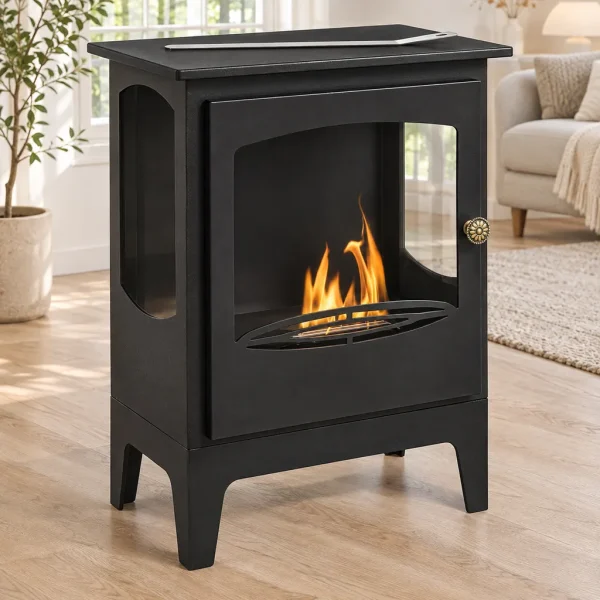
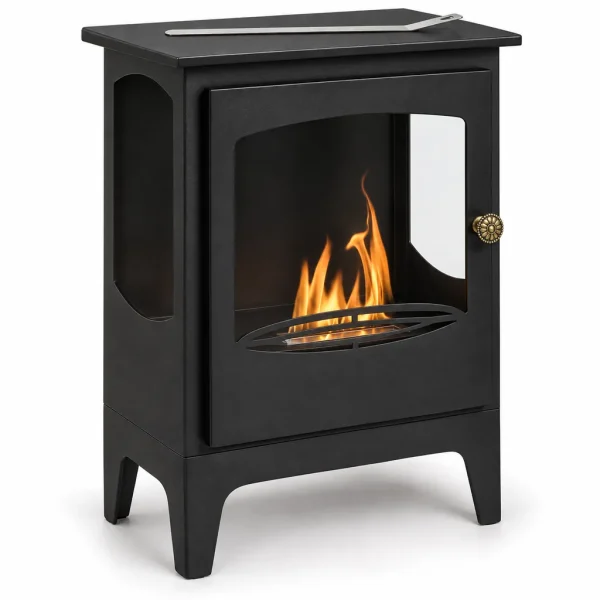
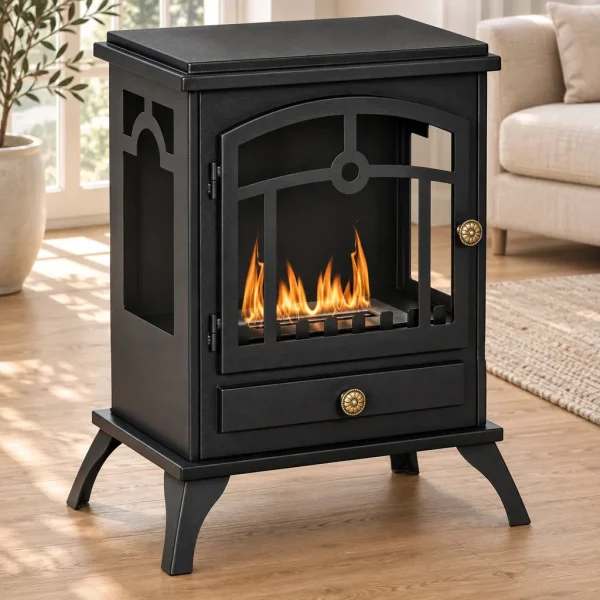
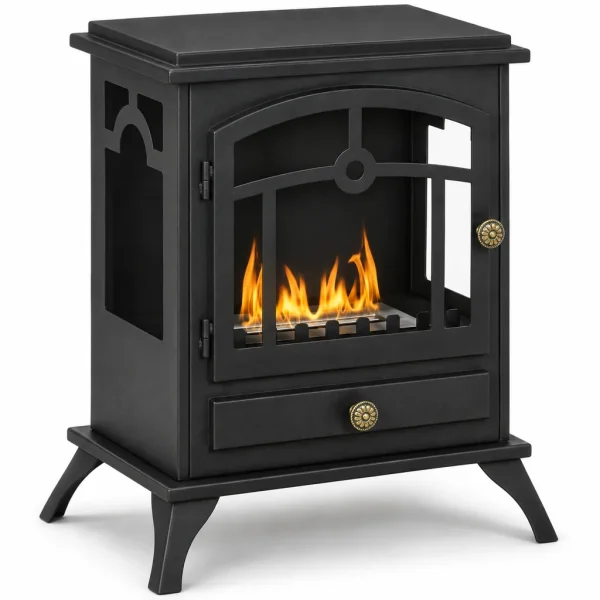
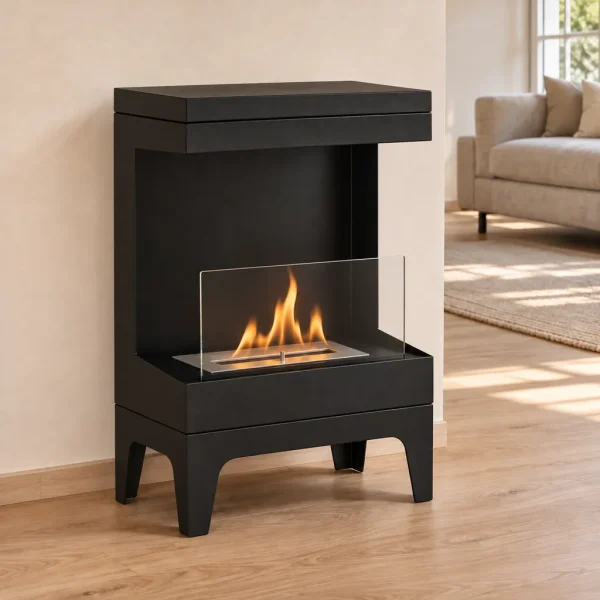
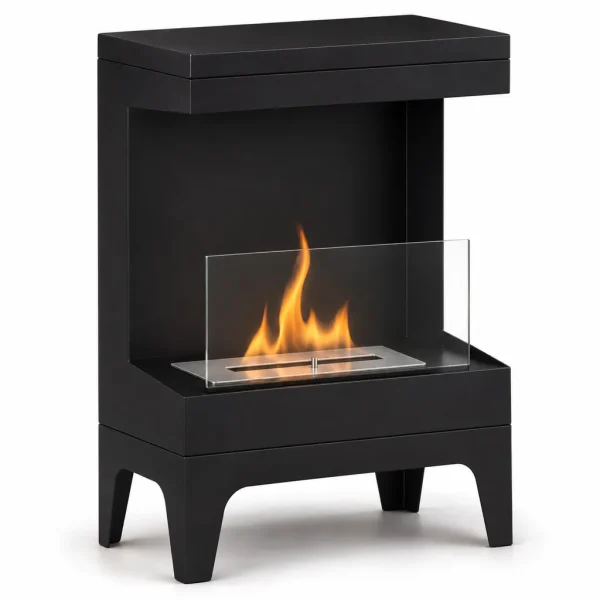
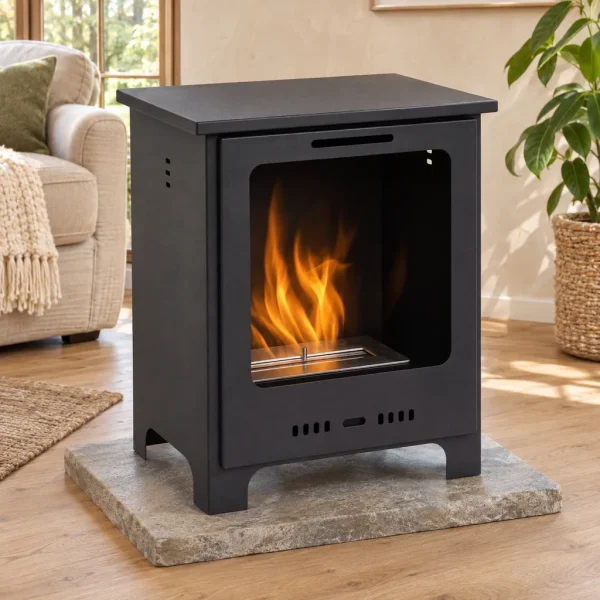
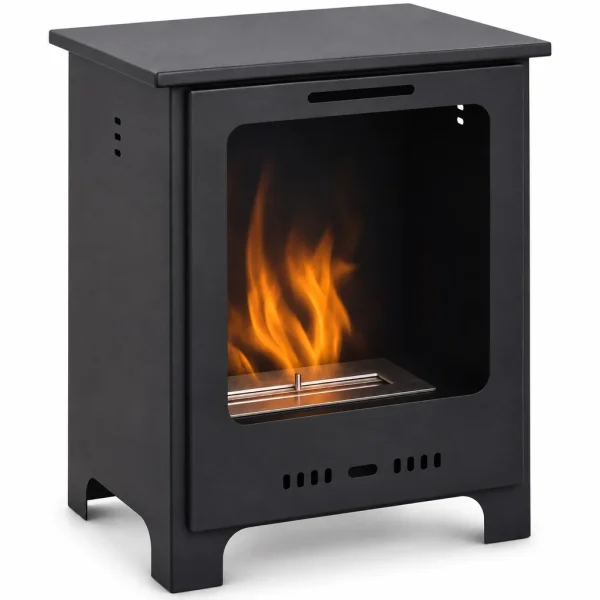
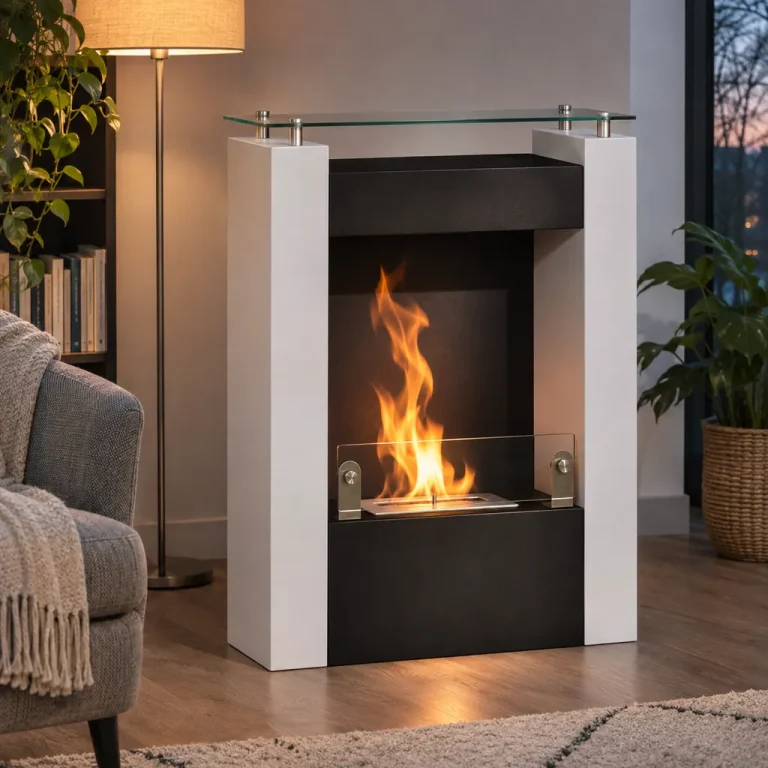
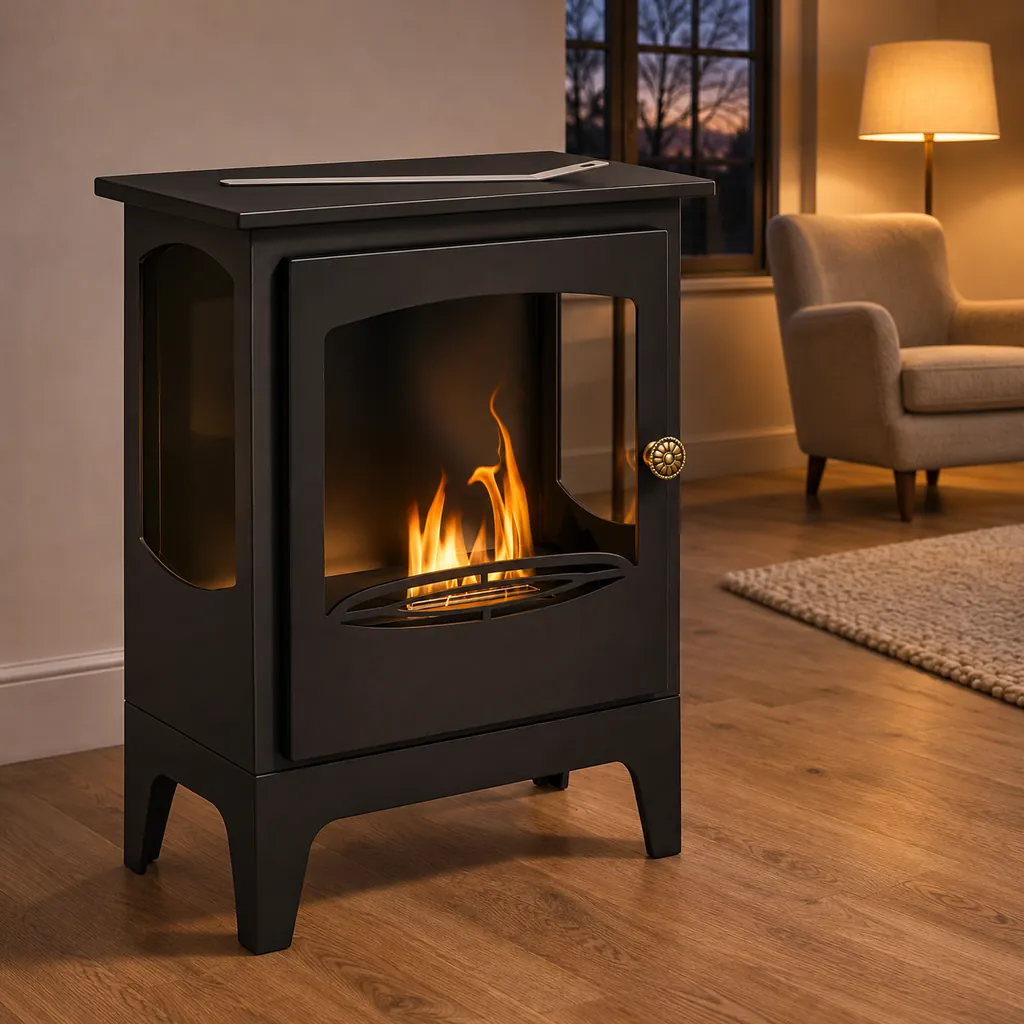
Look at how the flame is enclosed. Cordon has a protective glass screen at the front. Bonneval has a wide-opening door in the style of a wood burner, and Aussois a perforated door. Tignes has a large opening with rounded corners. With children or pets around, a glass screen and a good safe distance are preferable.
Accessories supplied
Check what comes with the stove to adjust and put out the flame. Bonneval comes with a stainless steel snuffer rod, Aussois with a stainless steel extinguishing tool, and Cordon with a lid that both adjusts and extinguishes the flame.
Style
- Retro: Aussois, with its perforated door and four legs.
- Contemporary: Bonneval, with its clean lines, or the more geometric Cordon.
- Simple modern-retro: Tignes, with an overhanging top and a rounded front.
Footprint
Our bioethanol stoves are between 38 and 45 cm wide. They fit into a corner of the living room, next to an armchair or in a bedroom. Remember to keep the safety clearances given in the instructions all around the appliance.
Where to put a bioethanol stove
A bioethanol stove is easy to move, but where you put it matters as much as which model you choose.
- On a flat, stable floor, away from walkways where it could be knocked.
- Away from flammable materials: curtains, cushions, bookshelves, dried plants. The manufacturer of Tignes, which comes without a fire screen, is particularly clear on this point.
- In a room you can ventilate, and where you stay while the fire is lit.
- Never inside a decorative surround that is not designed for bioethanol.
For maintenance, follow the instructions. For Tignes, the manufacturer recommends cleaning the stainless steel burner and covering it when not in use.
Which fuel should you use?
All our bioethanol stoves require bioethanol with an alcohol content of at least 95%. Fuel is not included. Never use any other liquid: no methylated spirits or other alcohol of a different strength, no petrol, and no gel not specified in the instructions. To choose and measure out your fuel, read our guide bioethanol fuel for stoves and fireplaces.
Mistakes to avoid
- Choosing a bioethanol stove to heat the whole house. It is a supplementary heater: it warms one room, it does not replace your heating.
- Putting it in a room that cannot be ventilated. Combustion takes place in the room.
- Refilling while hot to make the evening last longer. Always put the flame out and wait until the burner has cooled down completely.
- Leaving the extinguishing tool out of reach. Keep it close at hand every time the stove is lit.
- Storing the bioethanol container next to the appliance. Keep it closed and away from any source of heat.
Bioethanol stove or electric stove?
Both stand on the floor with no flue. The difference is the flame.
- Bioethanol stove: a real flame and no plug, but fuel to buy, store and handle with care.
- Electric stove: an LED flame effect, plugs into a socket, adjustable supplementary heat, and a flame effect you can use without heat.
If you want the flicker of a real flame and are happy to follow the safety precautions, choose bioethanol. If you want to switch on at the press of a button, with no fuel, take a look at our electric stoves.
See all our bioethanol stoves, or our full range of bioethanol fireplaces, including wall-mounted models.
Frequently asked questions
Does a bioethanol stove need a flue?
No. It works with no flue and no electrical connection. You do, however, need to ventilate the room regularly and keep to the safety clearances given in the instructions.
How long does a full burner last?
On our models, the manufacturers state about 3 hours for a 0.9 L or 1.2 L burner, and about 3.3 hours for Cordon with 95% alcohol. The actual burn time varies with the flame setting.
Can you refill the burner while the flame is lit?
Never. Put the flame out, wait until the burner is cold, then refill. This is the basic rule for any bioethanol appliance.
Is bioethanol supplied with the stove?
No. You will need bioethanol with an alcohol content of at least 95%, as stated on the product pages of our models.
Can you cook on a bioethanol stove?
No. A bioethanol stove is for atmosphere and supplementary heat; the manufacturers of Tignes, Bonneval and Cordon state that they are not designed for cooking.